

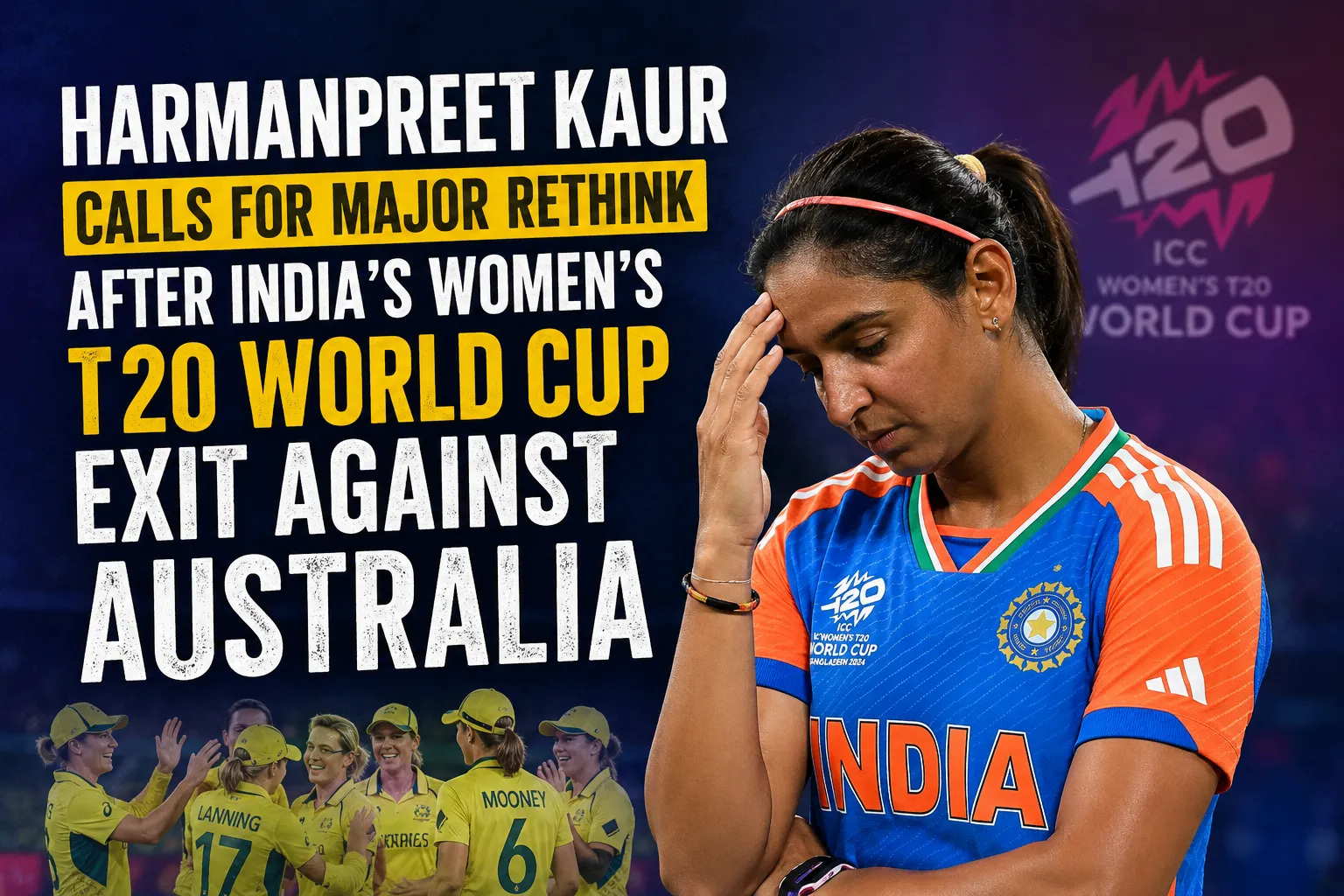
India captain Harmanpreet Kaur admitted the team must “rethink a lot of things” after its 2026 ICC Women’s T20 World Cup campaign ended with a defeat to Australia at Lord’s. The loss knocked the defending ODI world champions out in the league stage and highlighted several issues, including inconsistent batting, inexperienced pace bowling, poor fielding, and a lack of execution in crucial matches.
Despite producing her best innings of the tournament with a rapid half-century against Australia, Harmanpreet acknowledged that India failed to perform at the level required against the world’s strongest teams. Head coach Amol Muzumdar also stressed that rebuilding the bowling attack will take time while calling for patience with the team’s young seamers.
Harmanpreet Kaur Admits India Fell Short Against Top Teams
Following India’s elimination, Harmanpreet said the team had failed to meet its own expectations.
Although India remained competitive for long periods against Australia, the captain admitted the overall performance was below the standards expected from the side.
Speaking after the match, Harmanpreet said the team would need to reassess several areas before future international tournaments.
India’s Batting Failed to Capitalize in Key Matches
India’s batting showed promise throughout the tournament but struggled to maintain momentum against stronger opponents.
Smriti Mandhana finished as India’s leading run-scorer with:
- 205 runs
- Two half-centuries
However, her strike rotation became a concern in crucial matches. Against Australia, Smriti and Shafali Verma added 66 runs for the opening wicket but consumed 55 deliveries, leaving significant pressure on the middle order.
Other batting performances included:
- Harmanpreet Kaur: 141 runs
- Jemimah Rodrigues: 92 runs
- Yastika Bhatia: 41 runs
Despite Harmanpreet’s explosive 56 off 27 balls against Australia, India could not secure the victory required to reach the knockout stage.
Young Pace Attack Still Developing
India’s spin department remained the team’s strongest asset during the tournament, but the fast-bowling unit struggled for consistency.
The pace attack featured:
- Renuka Singh Thakur
- Arundhati Reddy
- Nandani Sharma
- Kranti Gaud
Together, the four seamers:
- Bowled 26.1 overs
- Conceded 235 runs
- Took 5 wickets
Head coach Amol Muzumdar defended the young bowling group, saying experience would significantly improve the attack over the next 18 months.
Meanwhile, left-arm spinner Shree Charani emerged as India’s standout bowler by claiming 14 wickets, providing control throughout the tournament.
Fielding Errors Cost India a Semifinal Spot
Fielding proved to be one of India’s biggest weaknesses during the tournament.
The team dropped 11 catches across its first four matches, with the most costly mistakes coming against South Africa.
India dropped Marizanne Kapp twice after Tazmin Brits had already received a reprieve. Kapp went on to score an unbeaten 81, guiding South Africa to victory in a result that significantly damaged India’s semifinal hopes.
The repeated fielding lapses highlighted the need for greater consistency in high-pressure situations.
Coach Amol Muzumdar Calls for Patience
While acknowledging the disappointing campaign, head coach Amol Muzumdar remained optimistic about the future.
He emphasized that India’s inexperienced bowling attack requires time to develop and believes the group will become much stronger over the next 18 months.
His comments suggest the management remains committed to building a long-term squad despite the World Cup setback.
What India Must Improve Before Future ICC Events
India’s early exit has exposed several areas requiring immediate attention.
Key priorities include:
- Improving fielding standards
- Developing a more consistent pace attack
- Better middle-order execution
- Clearer player roles
- Stronger performances against top-ranked opponents
With major tournaments, including the Asian Games and future ICC events, approaching, India’s management now faces important decisions regarding team selection, preparation, and overall strategy.