

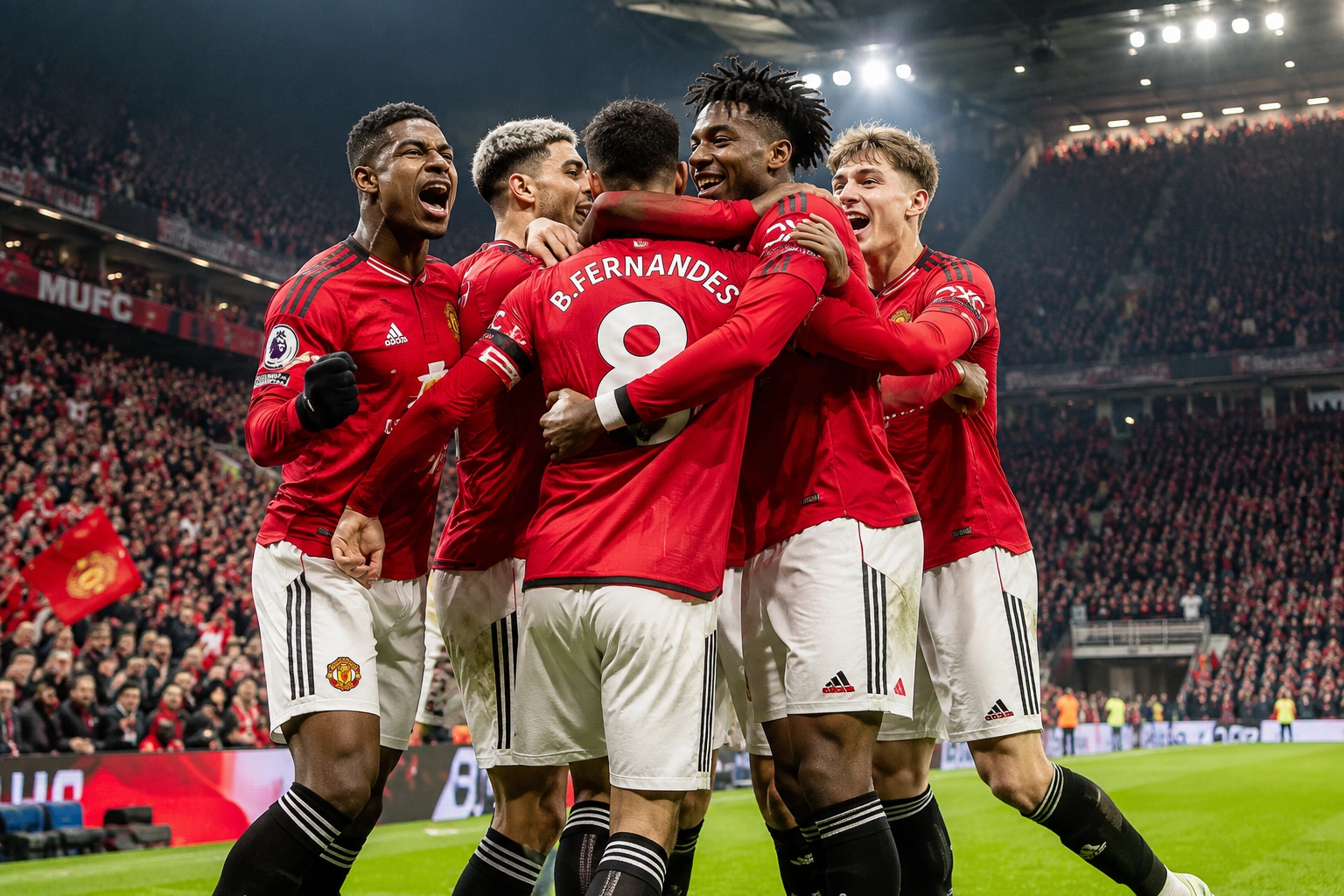
Football clubs come and go, but only a handful become institutions that shape the sport itself. Manchester United Football Club belongs firmly in that category. Whether you support the Red Devils, admire their history, or simply follow the Premier League, United remains one of football’s biggest names. Every season brings new fixtures, rising stars, tactical changes, and renewed expectations from millions of supporters around the world.
If you’re looking for an updated guide covering Manchester United fixtures, team information, star players, and what makes the club special, this article has everything you need.
Quick Summary
- Manchester United is one of England’s most successful football clubs.
- Home matches are played at the iconic Old Trafford stadium.
- The club competes in the Premier League and domestic cup competitions.
- Manchester United fixtures include league, FA Cup, League Cup, and European competitions when qualified.
- The current squad features experienced internationals alongside talented young players.
- The club continues rebuilding under modern football management with a focus on long-term success.
Manchester United Football Club: History, Identity and Legacy
Manchester United Football Club was founded in 1878 as Newton Heath LYR Football Club before adopting its current name in 1902. More than a century later, it has become one of the world’s most recognized sporting brands.
The club’s story includes dramatic triumphs, unforgettable comebacks, legendary managers, and generations of elite footballers. The achievements under Sir Matt Busby and later Sir Alex Ferguson transformed Manchester United into a global powerhouse.
Today, supporters can be found in virtually every country. Matchdays regularly attract millions of television viewers, while Old Trafford continues to welcome tens of thousands of fans every home game.
Club Information
| Category | Details |
| Club Name | Manchester United Football Club |
| Nickname | The Red Devils |
| Founded | 1878 (as Newton Heath) |
| Current Name Since | 1902 |
| Stadium | Old Trafford |
| Stadium Capacity | Approximately 74,000 |
| League | Premier League |
| Country | England |
| Club Colours | Red, White and Black |
Manchester United’s global popularity extends far beyond football. Its commercial reach, youth academy, and international fanbase have made it one of the sport’s most influential organizations.
Manchester United Fixtures: What Competitions Do They Play?
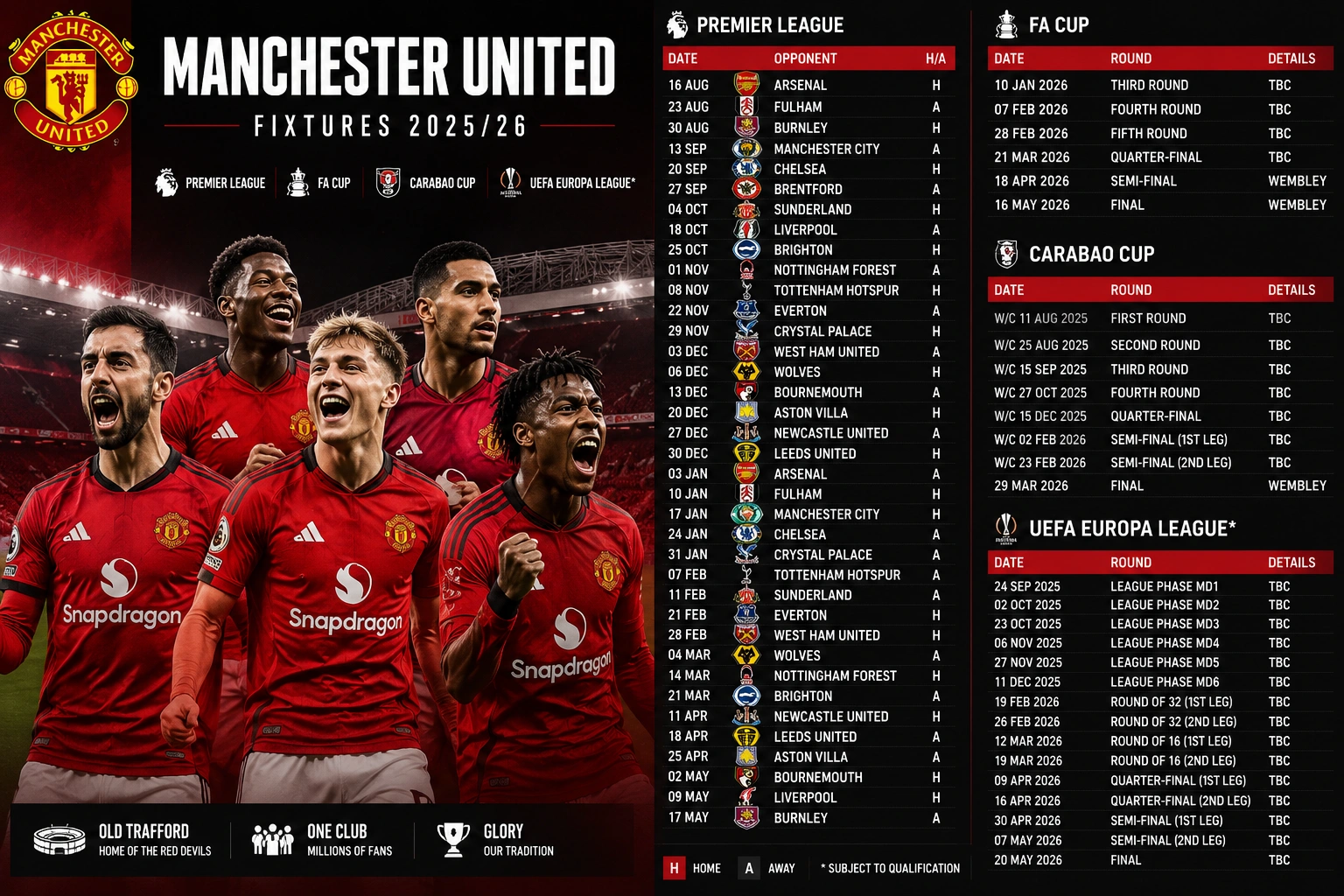
Supporters closely monitor Manchester United fixtures throughout the season because the club often competes on multiple fronts.
A typical campaign includes:
- Premier League
- FA Cup
- EFL Cup (Carabao Cup)
- UEFA competitions (Champions League or Europa League, depending on qualification)
The fixture calendar usually begins in August and concludes in May, although pre-season tours take place during the summer.
Premier League Fixtures
The Premier League remains the club’s primary competition. Manchester United plays 38 league matches every season, facing each opponent twice—once at Old Trafford and once away.
Key fixtures that attract worldwide attention include:
- Manchester United vs Manchester City
- Manchester United vs Liverpool
- Manchester United vs Arsenal
- Manchester United vs Chelsea
- Manchester United vs Tottenham Hotspur
These matches frequently influence the race for league positions, European qualification, and domestic bragging rights.
Cup Competitions
Manchester United has historically taken domestic cup competitions seriously.
The FA Cup remains one of England’s oldest football tournaments, while the League Cup offers another opportunity for silverware and squad rotation.
European fixtures add another level of excitement, testing the squad against top clubs from across the continent.
Inside the Manchester United Squad
One reason Manchester United remains one of football’s biggest attractions is its balanced squad. The club combines established internationals with academy graduates and promising young signings.
Modern football demands versatility. Managers require defenders comfortable on the ball, midfielders capable of controlling possession, and attackers who can press aggressively while contributing goals.
Goalkeepers
The goalkeeper serves as both the last line of defense and the first point of attack. Manchester United traditionally prioritizes shot-stopping ability, aerial command, and confident distribution from the back.
Defenders
United’s defensive unit typically includes:
- Central defenders
- Full-backs
- Wing-backs (depending on formation)
Strong positioning, aerial dominance, and tactical awareness remain essential qualities.
Midfielders
The midfield often determines how Manchester United controls matches.
Different roles include:
- Defensive midfielder
- Deep-lying playmaker
- Box-to-box midfielder
- Attacking midfielder
Successful midfield partnerships balance creativity with defensive stability.
Forwards
Manchester United has produced some of football’s greatest attacking players.
Today’s attack focuses on:
- Pace
- Direct running
- High pressing
- Clinical finishing
- Creative movement
The club continues investing in young attacking talent capable of leading the next generation.
Manchester United Top Players Who Define the Team
Every successful era has been built around exceptional footballers.
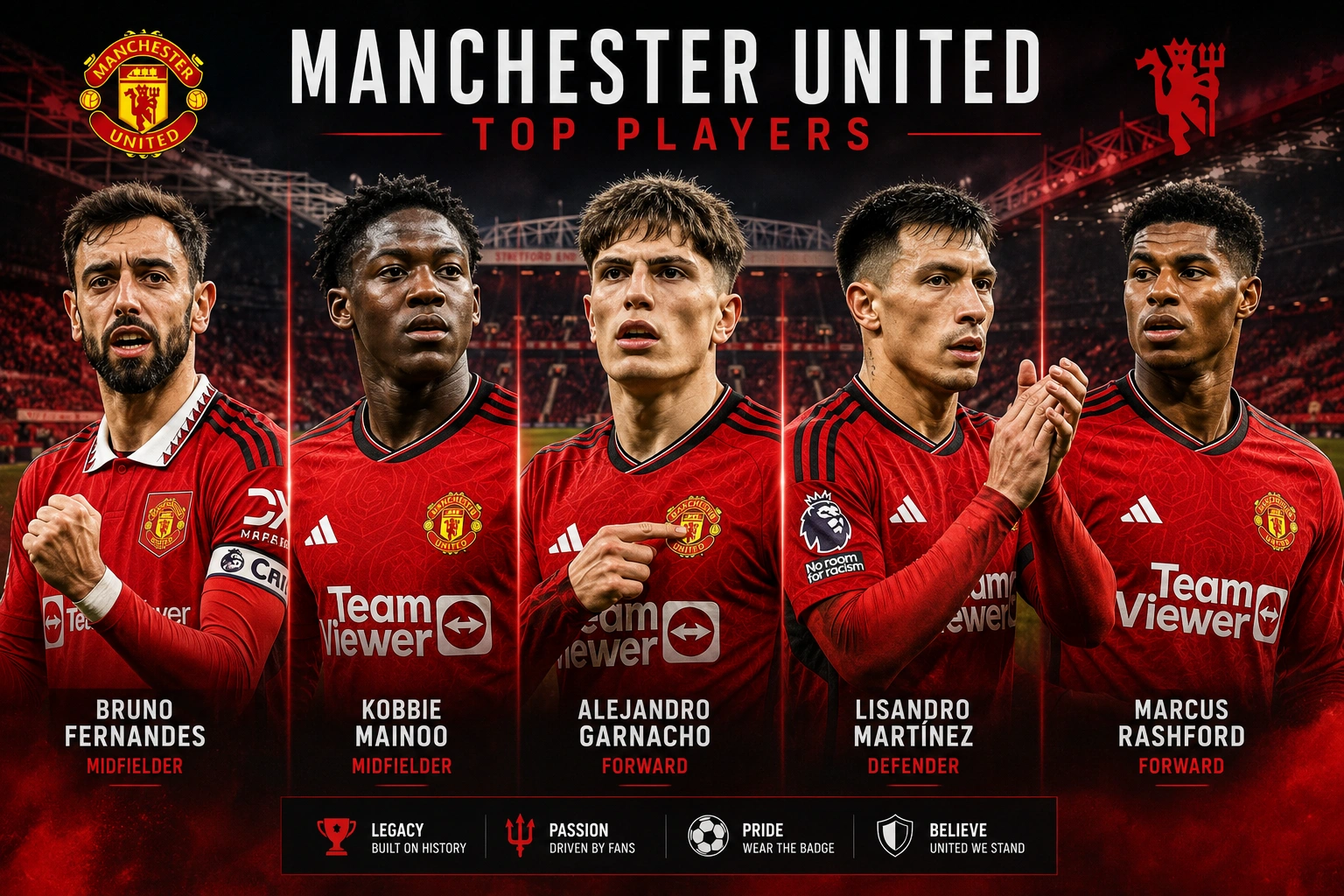
Here are some of the most influential players associated with Manchester United, alongside current stars who continue to shape the club’s future.
Bruno Fernandes
Bruno Fernandes has become one of Manchester United’s creative leaders. His vision, passing range, leadership, and ability to score from midfield make him one of the Premier League’s standout playmakers.
He consistently contributes:
- Goals
- Assists
- Chance creation
- Set-piece quality
Kobbie Mainoo
Mainoo represents the club’s commitment to youth development.
Calm under pressure and technically gifted, he has emerged as one of England’s brightest midfield prospects.
Supporters see him as an important long-term building block.
Alejandro Garnacho
Few young wingers excite fans as much as Garnacho.
His strengths include:
- Acceleration
- One-on-one dribbling
- Fearless attacking
- Eye for spectacular goals
His willingness to take defenders on reflects the attacking tradition associated with Manchester United.
Lisandro Martínez
Martínez brings aggression, leadership, and intelligent positioning to the defense.
Although not the tallest centre-back, his anticipation, tackling, and passing ability have made him a key figure whenever fully fit.
Emerging Academy Players
Manchester United has long been famous for promoting academy graduates.
The famous “Class of ’92” established a culture that still influences the club today. Every season, supporters eagerly watch youth prospects hoping they become the next homegrown superstar.
Why Old Trafford Remains One of Football’s Most Famous Stadiums
Old Trafford isn’t simply a football stadium.
It represents more than a century of memories, triumphs, disappointments, and unforgettable nights under the lights.
Nicknamed “The Theatre of Dreams,” it has hosted:
- Premier League classics
- FA Cup finals (historically)
- European knockout matches
- International football
- Major sporting events
With a capacity of around 74,000, it remains one of England’s largest club stadiums.
Visitors often describe the atmosphere before kickoff as one of football’s defining experiences.
The club has also announced long-term ambitions to modernize its stadium infrastructure while preserving the identity that supporters cherish.

Also Read: Best Free Legal Sports Streaming Sites (2026)
What Makes Manchester United Different From Other Clubs?
Success alone doesn’t explain Manchester United’s worldwide popularity.
Several factors contribute to its unique identity.
Rich History
Few clubs can match United’s combination of league titles, domestic cups, European trophies, and legendary players.
Youth Development
Manchester United has consistently trusted academy graduates.
That philosophy continues today, giving young players genuine opportunities.
Global Fanbase
Supporters’ clubs exist across Europe, Asia, Africa, North America, South America, and Australia.
Millions follow every fixture regardless of local kickoff times.
Attacking Football
Supporters traditionally expect entertaining, attacking football rather than purely defensive tactics.
This expectation has shaped the club’s identity across generations.
What Does the Future Hold for Manchester United?
Modern football changes quickly.
Financial regulations, data-driven recruitment, sports science, and tactical evolution all influence success.
Manchester United’s long-term strategy revolves around:
- Building a younger squad
- Improving consistency
- Returning to regular trophy contention
- Competing for Premier League titles
- Challenging Europe’s elite clubs
Achieving those goals requires patience, smart recruitment, effective coaching, and continued development of academy talent.
Frequently Asked Questions
When are Manchester United fixtures released?
Premier League fixtures are typically announced before the start of each season during the summer, while cup fixtures are confirmed after tournament draws. Match schedules may later change because of television broadcasting and European competitions.
Where does Manchester United play its home matches?
Manchester United plays home games at Old Trafford in Manchester, England. With a capacity of approximately 74,000, it is among the largest and most famous club football stadiums in Europe.
Who are Manchester United’s biggest rivals?
Manchester United’s biggest rivalries include Liverpool, Manchester City, Arsenal, and Leeds United. These fixtures consistently attract worldwide audiences because of their history, competitiveness, and passionate fan bases.
Which competitions does Manchester United participate in?
Manchester United competes in the Premier League every season and also participates in the FA Cup and EFL Cup. When qualified, the club also plays in UEFA Champions League or UEFA Europa League competitions.
Conclusion
Manchester United Football Club remains one of football’s defining institutions. From legendary players and unforgettable matches to the atmosphere of Old Trafford, the club continues to captivate supporters across the globe. Every season introduces fresh challenges, emerging stars, and high-profile fixtures that keep fans engaged from August through May. Whether you’re following the latest Manchester United fixtures or learning about the club for the first time, one thing is certain—the Red Devils continue to occupy a unique place in world football.