


Cricket has seen its share of controversies over the years, but few issues attract as much attention as anti-doping violations. That is exactly why Mohammad Nawaz’s return has become a talking point across the cricketing world. The Pakistan spinner has officially completed his ICC-imposed suspension and is now eligible to return to competitive cricket. While his case ended without allegations of deliberate cheating, it has once again sparked discussions about Pakistan cricket’s difficult history with doping-related incidents and the importance of maintaining strict anti-doping standards.
Quick Summary
- Mohammad Nawaz has completed his ICC anti-doping suspension.
- The suspension was linked to a whereabouts filing violation, not a positive drug test.
- Nawaz is now eligible to participate in domestic and international cricket.
- His case has revived memories of previous doping controversies involving Pakistan cricketers.
- The ICC’s anti-doping framework emphasizes athlete education, testing, and compliance with whereabouts regulations.
Mohammad Nawaz Cleared After ICC Doping Ban
Pakistan all-rounder Mohammad Nawaz has officially completed the suspension imposed under the ICC’s Anti-Doping Code and is once again available for selection.
One point deserves clarification because it has often been misunderstood. Nawaz was not suspended after failing a drug test. Instead, the sanction related to the anti-doping system’s whereabouts requirements, which require certain players to accurately report their location for out-of-competition testing. Missing or incorrectly filing these requirements can result in disciplinary action even without a positive doping sample.
That distinction matters.
The ICC’s anti-doping program is designed to ensure that players remain available for surprise testing throughout the year. The system operates on accountability rather than simply detecting banned substances after competitions.
With the suspension period now complete, Nawaz returns with a clean slate under the applicable regulations.
Why do whereabouts violations matter?
Many casual fans assume that doping cases always involve banned performance-enhancing drugs. That isn’t true.
Elite athletes included in registered testing pools must:
- Keep their location information updated.
- Be available during designated testing windows.
- Respond to anti-doping authorities accurately.
- Avoid repeated filing failures or missed tests.
These rules exist because effective anti-doping programs rely on surprise testing rather than only testing during matches.
Understanding the ICC Anti-Doping System
The ICC follows internationally recognized anti-doping standards that align closely with the World Anti-Doping Agency (WADA) Code.
The objective is straightforward: create a level playing field while protecting clean athletes.
Players can face sanctions for several reasons
These include:
- Testing positive for prohibited substances.
- Refusing a doping test.
- Tampering with the testing process.
- Possessing banned substances.
- Trafficking prohibited drugs.
- Multiple whereabouts failures.
Importantly, not every violation carries the same severity.
For example, an athlete who unknowingly consumes a contaminated supplement may receive a different sanction than someone found intentionally using anabolic steroids. Similarly, administrative failures involving whereabouts reporting are treated differently from confirmed use of prohibited substances.
That nuance is often lost in headlines.
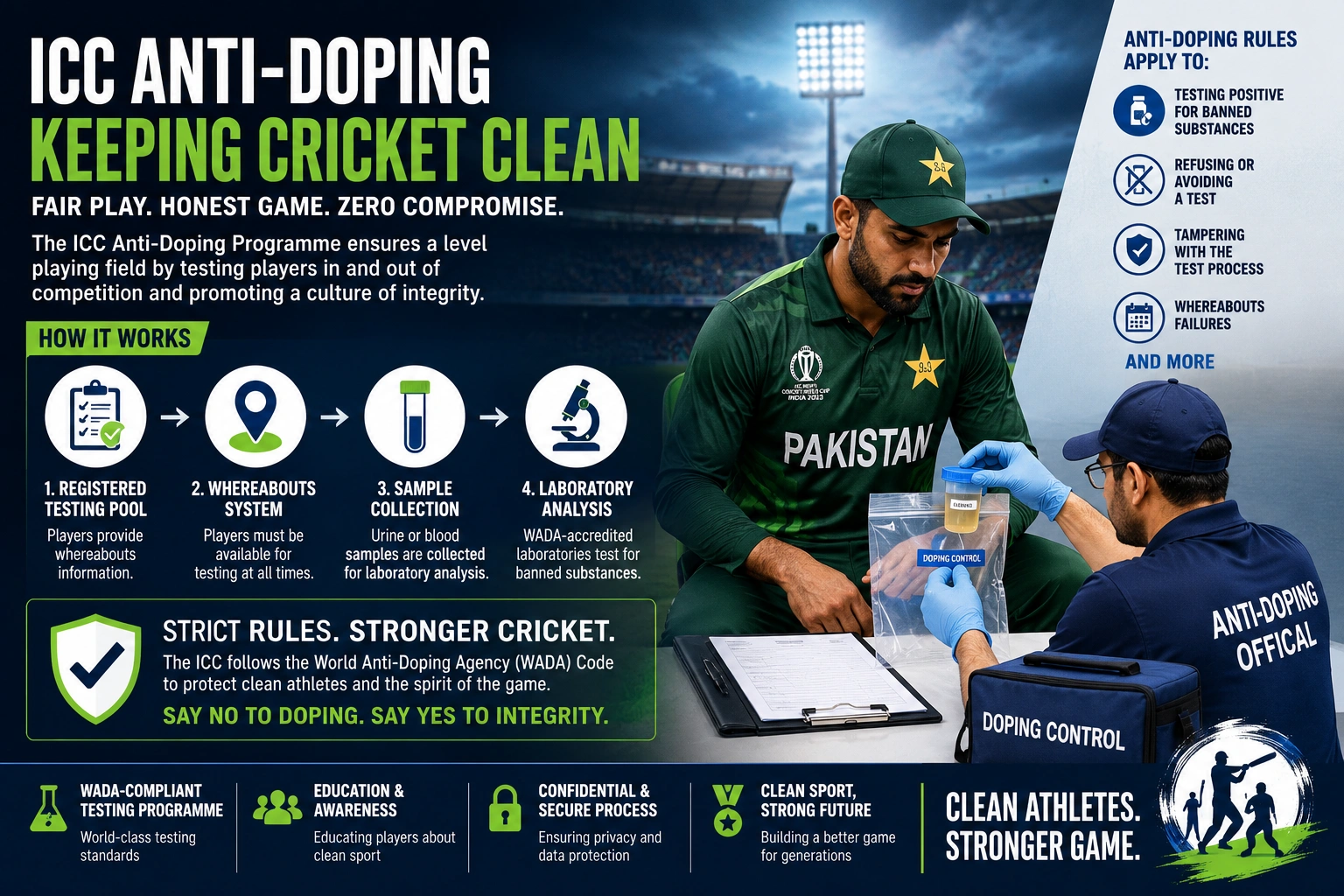
ICC anti-doping regulations require players to comply with strict testing and whereabouts rules.
Pakistan Cricket’s History With Doping Controversies
Although Pakistan has produced some of the greatest cricketers in history, it has also witnessed several high-profile anti-doping incidents over the past two decades.
Each case has had its own circumstances, making it unfair to treat them all as identical.
Shoaib Akhtar and Mohammad Asif (2006)
Perhaps the most famous doping controversy in Pakistan cricket involved fast bowlers Shoaib Akhtar and Mohammad Asif.
Both players tested positive for the anabolic steroid nandrolone during domestic testing before the 2006 ICC Champions Trophy.
The incident dominated international headlines and raised serious questions about anti-doping oversight in Pakistan cricket. Their suspensions eventually underwent appeals and legal reviews, but the controversy remains one of the country’s biggest sporting scandals.
Yasir Shah (2015)
Leg-spinner Yasir Shah received a suspension after testing positive for chlortalidone, a prohibited masking agent.
Yasir maintained that the substance came from medication prescribed to his wife, and the explanation was accepted during the disciplinary process. His suspension was later reduced, allowing him to return to international cricket.
The case became an important reminder that athletes are ultimately responsible for every substance found in their bodies, regardless of intent.
Other Domestic-Level Cases
Pakistan’s domestic cricket structure has also seen multiple anti-doping investigations over the years involving lesser-known players.
While these incidents rarely attract international media coverage, they reinforce the importance of regular education programs and stricter compliance procedures across all levels of professional cricket.
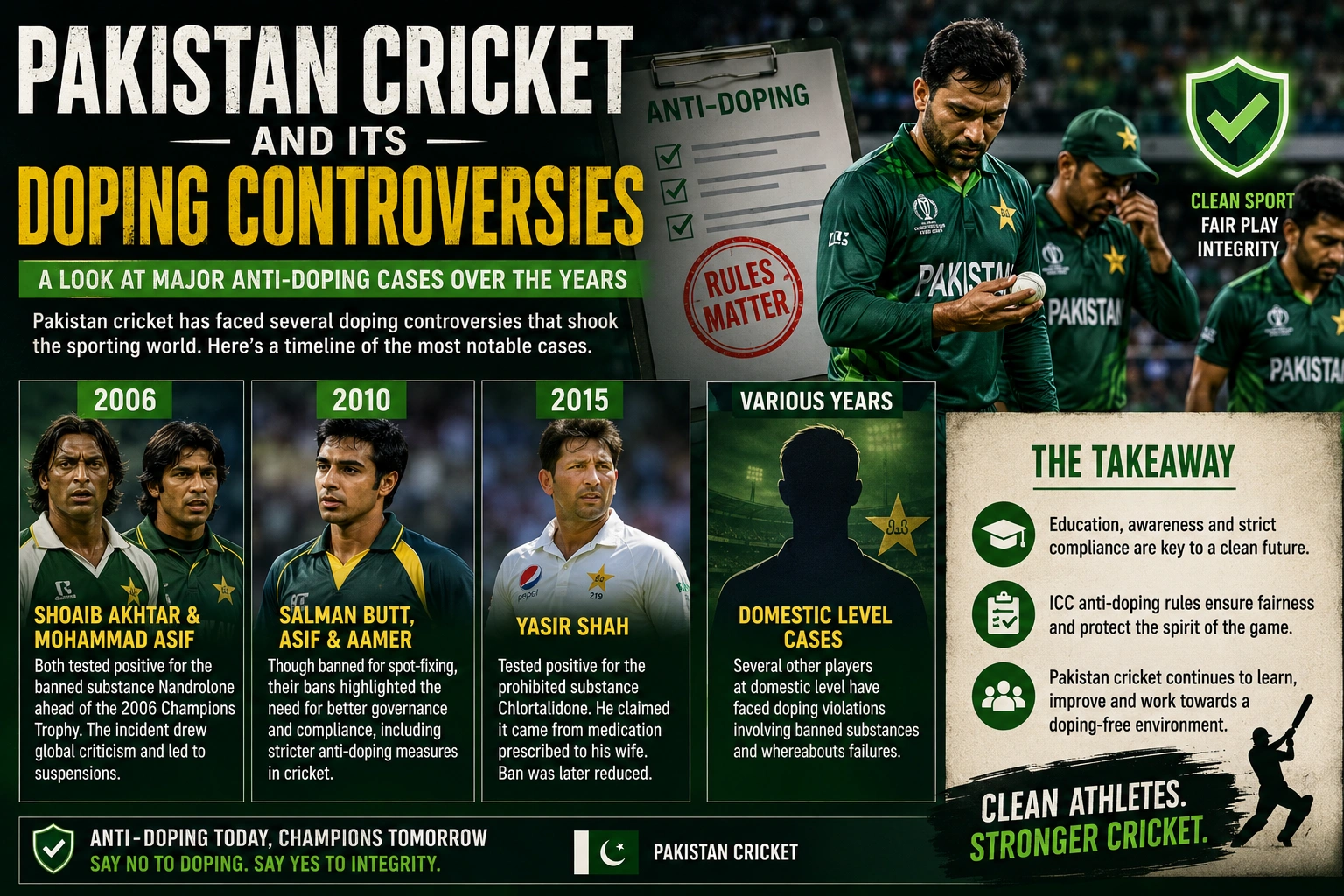
What Mohammad Nawaz’s Return Means for Pakistan Cricket
Nawaz returns at a time when Pakistan cricket continues to undergo significant changes across formats.
His value extends beyond left-arm spin.
He provides:
- Lower-order batting stability.
- Experience in pressure situations.
- Tactical flexibility.
- Strong fielding standards.
- Balance in limited-overs cricket.
Selectors will now evaluate him purely on cricketing merit rather than disciplinary concerns.
His comeback also offers an opportunity for Pakistan Cricket to reinforce the message that compliance with anti-doping regulations is as important as fitness and skill development.
Modern international cricket leaves very little room for administrative errors.

Also Read: India National Cricket Team vs New Zealand National Cricket Team Timeline: From Friendly Beginnings to Fierce Modern Battles
Why Anti-Doping Education Is More Important Than Ever
Professional cricket today involves year-round travel, franchise leagues across multiple countries, specialized nutrition plans, supplements, rehabilitation programs, and frequent testing.
That complexity increases the risk of accidental violations.
Many cricket boards now educate players on topics such as:
Supplement safety
Not every commercially available supplement is safe for elite athletes.
Even products marketed as “natural” can contain banned ingredients through contamination.
Prescription medication
Athletes must verify every prescribed medicine against the prohibited substances list before use.
Travel compliance
Maintaining accurate whereabouts information becomes more difficult when players move between international tours, domestic competitions, and franchise leagues.
Record keeping
Professional athletes increasingly rely on medical documentation and digital compliance systems to reduce the chances of accidental rule breaches.
Education has become just as valuable as enforcement.
Lessons From Pakistan Cricket’s Past
Every sporting nation has faced anti-doping challenges.
Pakistan is not unique.
Australia, England, India, South Africa, Sri Lanka, and several other cricketing nations have all dealt with individual anti-doping cases at different points.
The real measure of a sporting system is how effectively it responds.
Pakistan Cricket has invested more heavily in player education, medical guidance, and compliance procedures over recent years. While isolated cases continue to emerge—as they do in many sports—the overall emphasis has shifted toward prevention rather than punishment.
Mohammad Nawaz’s case also illustrates an important distinction that fans should remember: administrative anti-doping violations and intentional doping are not automatically the same thing.
Understanding that difference leads to fairer public discussion and more informed reporting.
Frequently Asked Questions
Was Mohammad Nawaz banned for using performance-enhancing drugs?
No. His suspension related to an anti-doping compliance matter involving whereabouts requirements rather than a confirmed positive test for performance-enhancing drugs.
Can Mohammad Nawaz play international cricket again?
Yes. Having completed the ICC-imposed suspension, Nawaz is now eligible to participate in domestic and international cricket, subject to team selection.
What are whereabouts violations in cricket?
Elite players in registered testing pools must regularly update their location details for surprise drug testing. Repeated failures to comply can lead to disciplinary sanctions even without a positive drug test.
Has Pakistan cricket faced doping controversies before?
Yes. High-profile cases have involved players such as Shoaib Akhtar, Mohammad Asif, and Yasir Shah, although each incident differed significantly in circumstances and regulatory findings.
Conclusion
Mohammad Nawaz’s return marks the end of a disciplinary chapter rather than the beginning of another controversy. His case serves as a reminder that modern anti-doping programs extend well beyond laboratory tests. Compliance, transparency, and education now play equally important roles in protecting cricket’s integrity. As Nawaz resumes his career, Pakistan cricket has another opportunity to demonstrate that learning from past mistakes is just as valuable as winning matches.