

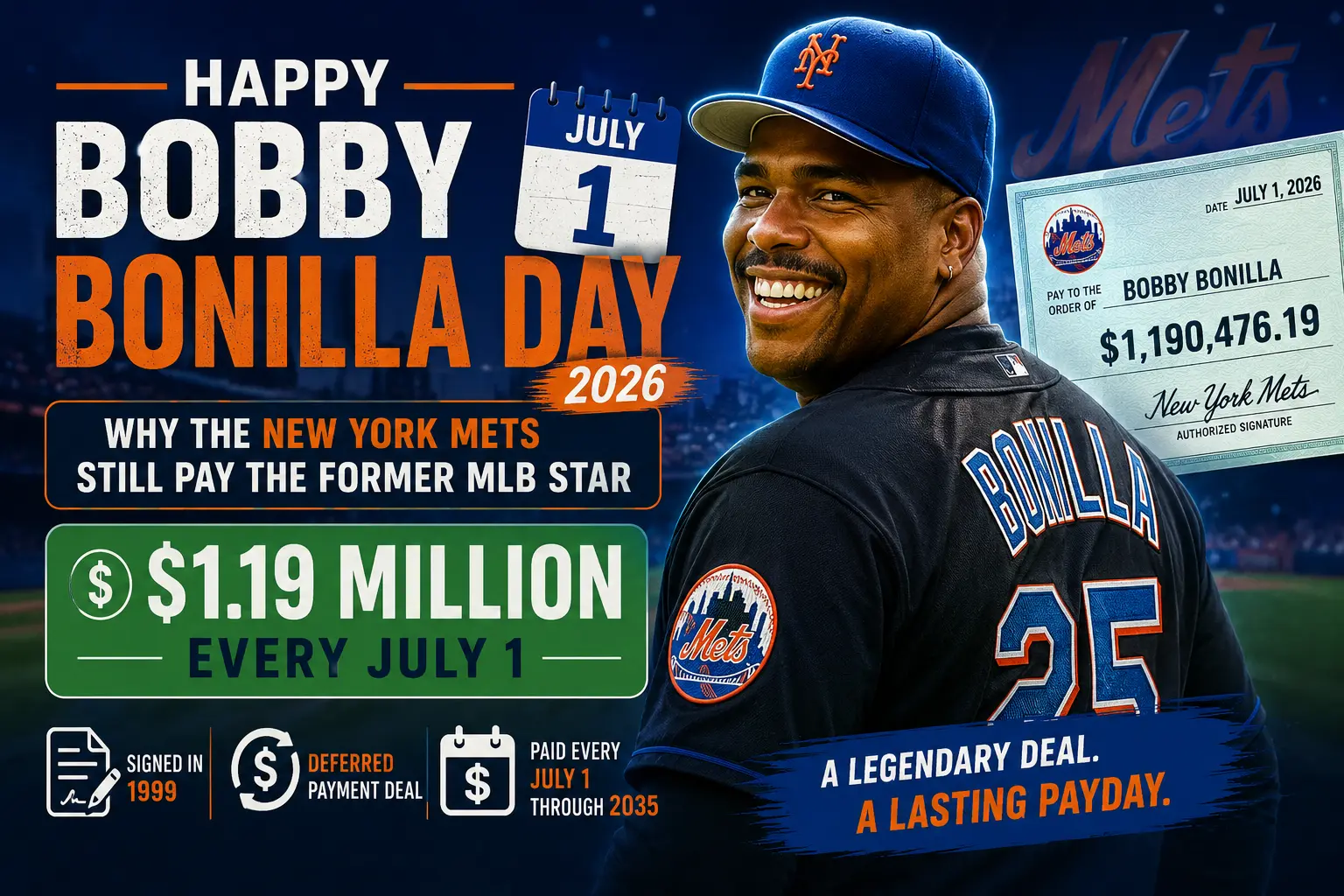
Every July 1, baseball fans celebrate Bobby Bonilla Day 2026, one of the most remarkable financial stories in Major League Baseball history. Although the former New York Mets outfielder retired more than two decades ago, he continues to receive an annual payment of approximately $1.19 million under a deferred contract signed in 1999.
Now 63 years old, Bonilla is receiving the 16th annual installment of the agreement in 2026. The unique payment structure will continue until July 1, 2035, making it one of the longest-running deferred compensation deals in professional sports and a recurring topic every MLB season.
Why Do the New York Mets Still Pay Bobby Bonilla?
The Mets continue paying Bonilla because they agreed to defer approximately $5.9 million owed to him in 1999 instead of making an immediate payout.
Under the agreement, the deferred amount accrued 8% annual interest, transforming the original balance into yearly payments of around $1.19 million. The installments began in 2011 and will continue every July 1 through 2035.
The contract has become one of baseball’s most famous examples of deferred compensation, demonstrating how long-term financial planning can benefit both players and teams.
Bobby Bonilla Contract Details
| Contract Detail | Information |
| Annual Payment | Approximately $1.19 million |
| Original Deferred Amount | About $5.9 million |
| Interest Rate | 8% |
| Payment Start | 2011 |
| Final Payment | July 1, 2035 |
| Bonilla’s Age in 2026 | 63 years |
Why Bobby Bonilla Accepted Deferred Payments
Rather than taking the remaining money immediately, Bonilla opted for guaranteed long-term income.
The arrangement provided financial stability well beyond his playing career, ensuring a dependable annual payment throughout retirement. Deferred contracts remain attractive to many athletes because they offer predictable earnings long after active competition ends.
For Bonilla, the deal has become one of the most successful examples of securing long-term financial security through deferred compensation.
Why the Contract Still Matters in MLB
The Mets originally believed postponing Bonilla’s payment would provide greater financial flexibility and allow the organization to generate stronger investment returns.
However, those expectations were later undermined by the Bernard Madoff investment scandal. Despite the financial setbacks, the franchise remained legally obligated to honor the contract and has continued making every scheduled payment.
The agreement has since become a case study in sports finance, illustrating both the opportunities and risks associated with deferred salary structures.
Bobby Bonilla’s Career Extended Beyond the Contract
Although his annual payment attracts headlines every summer, Bonilla also enjoyed a highly successful Major League Baseball career.
Across 2,010 MLB games, the switch-hitting slugger recorded:
- .279 batting average
- 287 home runs
- 1,173 RBIs
During his career, Bonilla represented seven franchises:
- Pittsburgh Pirates
- New York Mets
- Baltimore Orioles
- Florida Marlins
- Los Angeles Dodgers
- Atlanta Braves
- St. Louis Cardinals
His most productive years came with the Pittsburgh Pirates, where he established himself as one of baseball’s premier switch hitters and earned multiple All-Star selections.
How Bobby Bonilla’s Deal Influenced Baseball Contracts
The Bonilla agreement continues to influence how MLB organizations structure player contracts.
Deferred compensation remains a valuable payroll management tool for clubs while offering players guaranteed future earnings. Similar payment structures have since appeared in contracts involving players such as Manny Ramirez, Chris Davis, and Christian Yelich.
The widespread attention surrounding Bonilla’s agreement has also encouraged teams and agents to place greater emphasis on balancing immediate earnings with long-term financial security.
Why Bobby Bonilla Day Remains a Baseball Tradition
Every July 1, Bobby Bonilla Day serves as a reminder that an innovative contract can remain relevant decades after a player’s retirement.
More than just a viral sports story, the annual payment highlights the lasting impact of creative contract negotiations and remains one of the most fascinating financial agreements in Major League Baseball history.
Key Takeaways
- Bobby Bonilla received his 16th annual payment of approximately $1.19 million in 2026.
- The deferred contract originated from $5.9 million owed by the Mets in 1999.
- Annual payments began in 2011 and continue until 2035.
- Bonilla finished his MLB career with 287 home runs, 1,173 RBIs, and a .279 batting average.
- The agreement remains one of the most iconic deferred compensation deals in professional sports.